
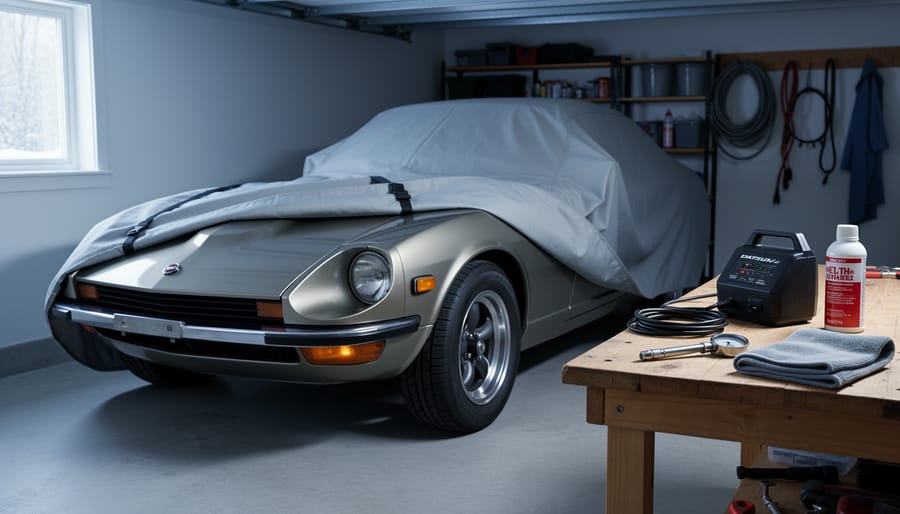
Seasonal Preparations for Classic Cars: A to Z Storage and Maintenance Timing Guide
For most Datsun Z-series owners, winterization should begin in late October through mid-November, while spring awakening timing falls between late March and early April. These windows shift considerably based on your climate zone and how you store your car, with southern collectors often able to extend their driving season by several weeks in either direction.
The Z-car’s distinctive characteristics make timing particularly critical. Unlike daily drivers that gradually transition between seasons, these Japanese legends from the 1970s and early 1980s demand deliberate preparation at season’s end. The 240Z, 260Z, and 280Z were built for spirited driving, not extended dormancy, so getting the timing right protects everything from fuel systems to rubber components.
Your climate matters more than the calendar. Coastal regions with moderate winters present different challenges than areas where temperatures regularly plunge below freezing. The same holds true for spring prep, where an early thaw might tempt you to pull the cover off too soon, exposing freshly awakened seals and gaskets to another hard freeze.
The decision isn’t just about temperature thresholds. Modern ethanol-blended fuels complicate storage in ways that earlier Z-car owners never encountered. Moisture infiltration, battery drain, and tire flat-spotting all follow their own timelines, independent of the first frost date. Understanding these factors helps you protect decades of automotive heritage wrapped in those iconic flowing fenders.
This guide provides specific timing windows for winterization and spring prep, then walks through the variables that should adjust your personal schedule.
The Quick Answer: Seasonal Preparation Timeline for Classic Cars
For most classic car owners in temperate climates, two preparation windows define your annual calendar. Winterization should begin in late October through early November, after your final autumn drives but before the first hard freeze threatens fluid systems and seals. This window allows you to complete fuel stabilization, fluid changes, and protective measures while temperatures remain workable and your car hasn’t yet suffered cold-weather stress.
Spring awakening typically falls in late March through April, when consistent warmer weather returns but before you’re tempted to immediately drive aggressively. This period allows gradual recommissioning, inspecting seals, checking fluids that may have settled or separated, exercising mechanical systems gently, and addressing any storage-period issues before putting real demands on the car. Rushing this process risks overlooking problems that winter dormancy may have created or worsened.
These windows shift based on your specific climate zone, storage environment, and vehicle type, but they provide the foundation for seasonal timing. The goal isn’t arbitrary calendar dates, it’s protecting your classic car from the mechanical stress that temperature transitions create while giving yourself adequate time for thorough, unhurried preparation work.
Understanding Your Seasonal Preparation Windows
Fall Winterization: The Pre-Storage Window
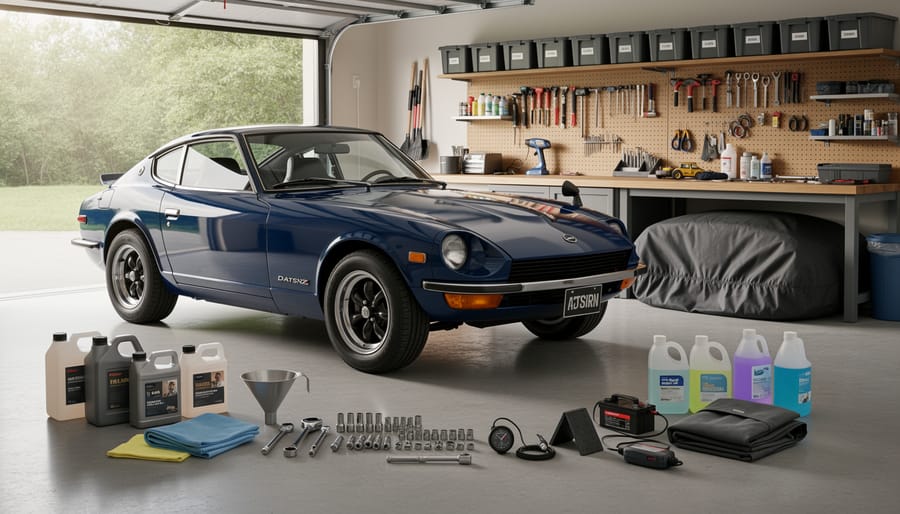
Most classic car owners in temperate climates should begin winterization between late October and mid-November, a window carefully calibrated to protect your vehicle from winter’s harshest effects. This timeframe isn’t arbitrary, it represents the sweet spot after your driving season naturally winds down but before the first hard freeze threatens fluid systems, battery health, and unprotected surfaces.
The October-November window exists for several practical reasons. First, temperatures in most regions remain mild enough (typically 40-60°F) for fluids to drain properly and for you to work comfortably in an unheated garage. Second, this period falls after autumn foliage runs and car show season but before winter weather arrives in earnest, giving you a predictable window to complete tasks methodically rather than rushing against an approaching storm. Third, professional detailers, mechanics, and storage facilities maintain reasonable availability before the holiday rush begins.
During this pre-storage window, your winterization checklist should include:
- Complete oil and filter change with fresh lubricant that won’t degrade during storage
- Fuel system preparation including tank fill and stabilizer addition to prevent varnish buildup
- Battery removal or tender connection to maintain charge through dormancy
- Tire inflation to recommended pressure plus 5-10 PSI to prevent flat-spotting
- Thorough cleaning, drying, and appropriate cover selection for your storage environment
Starting too early, say, in September, means your car sits idle during prime driving weather, and fluids begin their storage degradation process unnecessarily soon. Conversely, delaying until December or waiting for the first snowfall creates rushed, incomplete preparation. Working in freezing temperatures makes fluid changes difficult, batteries may already suffer cold-weather damage, and moisture trapped on surfaces during hasty cleaning can freeze and cause finish damage.
The consequences of poor timing extend beyond immediate inconvenience. A battery left connected through a Midwest winter without preparation will likely fail by spring. Fuel left unstabilized for five months forms varnish deposits that clog carburetors and injectors. Tires stored at low pressure develop permanent flat spots requiring replacement. These aren’t theoretical risks, they’re predictable outcomes that erode both your car’s reliability and your enjoyment when spring arrives.
Spring De-Winterization: The Awakening Period
Spring brings the promise of open roads and eager anticipation among classic car owners, but the awakening period demands patience. The March-April window serves as your transition from storage to driving season, and rushing this process risks undoing months of careful preservation. Temperature stability matters more than calendar dates, wait until nighttime lows consistently stay above freezing and daytime temperatures reach 50°F or higher before beginning your de-winterization work.
The gradual recommissioning process protects mechanical systems that have sat dormant for months. Cold oil hasn’t circulated, seals have contracted, fuel systems may have developed varnish deposits, and tires have developed flat spots from stationary weight. Your Z-car’s mechanical fuel injection or carburetors need careful reawakening, and electrical systems benefit from incremental power restoration rather than immediate full loads.
- Visual inspection before touching anything, check for rodent damage, fluid leaks, tire condition, and any storage cover issues that might have developed during winter months.
- Remove spark plugs and hand-crank the engine (or use the starter in short bursts) to verify no hydraulic lock exists and to distribute oil through cylinders before combustion begins.
- Check and top off all fluids, engine oil, coolant, brake fluid, clutch fluid, and inspect for contamination or separation that indicates moisture intrusion during storage.
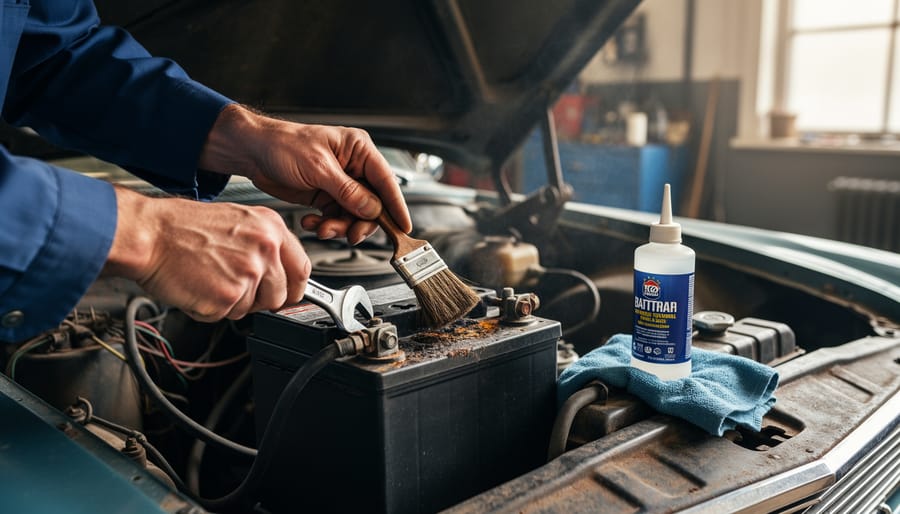
- Reconnect and load-test the battery, checking voltage under load and inspecting terminals for corrosion that may have formed despite trickle charging.
- Inspect fuel system components, replace fuel filter if equipped, and verify fuel hasn’t developed varnish or phase separation from any remaining ethanol content.
- Reinstall spark plugs, prime the fuel system, and attempt initial start, expect rough running for the first few minutes as systems reestablish normal operation.
- Perform a thorough brake inspection and test at low speeds before attempting highway driving, as seals and hydraulics need time to reseat and regain full effectiveness.
The mechanical awakening shouldn’t end with a successful start. Your first drives should be short, low-speed excursions that allow fluids to reach operating temperature gradually. Many experienced collectors following restore techniques recommend keeping initial trips under 20 miles and avoiding highway speeds for the first 50-100 miles of the season. This gradual approach lets gaskets reseal, bearing surfaces re-establish their oil films, and brake components regain full friction characteristics after months of dormancy.
Geographic and Climate Factors That Shift Your Timing
Regional Climate Zones and Their Preparation Schedules
Your classic car’s seasonal schedule hinges on where you actually keep it. A 240Z in Minnesota faces completely different preparation deadlines than one in Southern California or coastal Georgia.
Northern and Snow-Belt States (Wisconsin, Minnesota, Maine, Upper Michigan, Montana)
In these regions, winter arrives early and stays late. Begin winterization by mid-October, before temperatures consistently drop below 40°F at night. The first unexpected freeze can catch you unprepared, risking coolant damage or moisture infiltration. Your storage period typically runs five to six months, meaning your Z won’t see daylight until mid-April at the earliest. Don’t rush the spring awakening, even if March brings a warm weekend, sustained freezing nights require patience. Wait until nighttime temperatures reliably stay above 35°F.
Southern and Mild-Winter States (Florida, Southern California, Arizona, coastal Texas)
Many southern owners skip winter storage entirely, maintaining year-round driving schedules with modified maintenance intervals. If you do choose to store during the hottest months instead, reverse the calendar, prepare in late May, awaken in September. For those storing despite mild winters, a light November preparation suffices, with February recommissioning. Your focus shifts from freeze protection to heat, UV exposure, and humidity management.
Coastal Regions (Pacific Northwest, Mid-Atlantic, Gulf Coast)
Humidity drives your timeline more than temperature. In Seattle or Charleston, winterize by early November to escape the wettest months, but your preparation emphasizes moisture control, desiccants, vapor barriers, and ventilation, rather than freeze protection. Spring awakening can begin in late March, but inspect thoroughly for condensation damage and corrosion before starting the engine.
| Climate Zone | Winterization Start | Typical Storage Duration | Spring Awakening |
|---|---|---|---|
| Northern/Snow-Belt | Mid-October | 5-6 months | Mid-April to early May |
| Southern/Mild | Optional or reversed (summer storage) | 0-3 months | Year-round or September |
| Coastal | Early November | 3-4 months | Late March |
| Mountain/High-Altitude | Late September | 6-7 months | Late April to May |
Mountain and High-Altitude Locations (Colorado Rockies, Sierra Nevada, Appalachian elevations above 5,000 feet)
Elevation compounds cold. Start winterization in late September, well before valley residents begin. Snow can arrive in October and linger into May, extending your storage window to six or seven months. Spring awakening often waits until late April or early May, when roads clear and temperatures stabilize. The thin air and temperature swings also affect fuel system preparation and battery maintenance schedules.
Adjust these windows by two weeks in either direction based on your specific microclimate and the year’s weather patterns, but use them as your planning baseline.
Year-Round Driving vs. Seasonal Storage Decisions
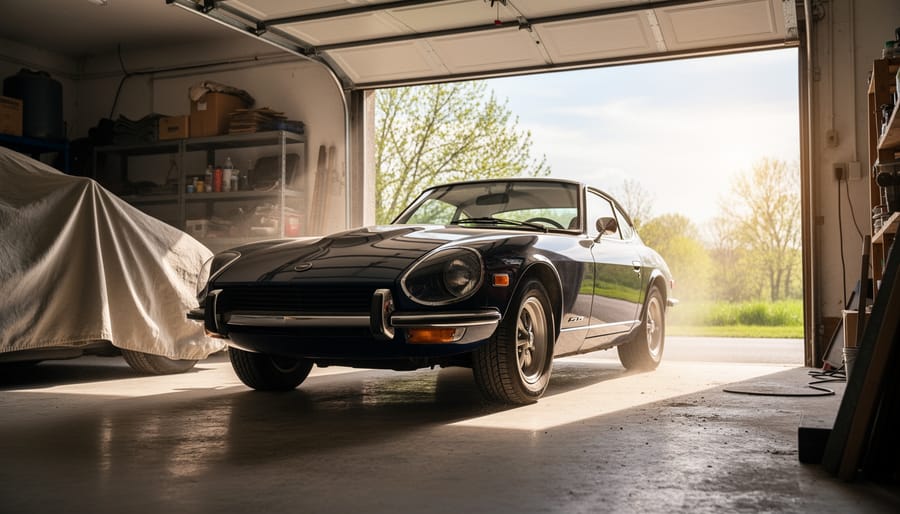
In climates where freezing temperatures are rare or brief, classic car owners face a different decision entirely: whether seasonal storage makes sense at all. The traditional fall-winter hibernation evolved in snow-belt regions where road salt and sub-freezing conditions made driving impractical and destructive. In Southern California, coastal Florida, Arizona, or similar mild zones, these threats largely disappear, opening the possibility of year-round enjoyment without the seasonal preparation rituals.
The case for year-round driving rests on several advantages. Your Z-car’s mechanical systems benefit from regular operation; seals stay pliable, fluids circulate, battery charges naturally, and condensation never has a chance to accumulate in the crankcase or exhaust. You avoid the physical and financial commitment of storage space. Most importantly, you actually drive the car you’ve invested in preserving, experiencing what made these machines desirable in the first place.
However, year-round operation demands adapted maintenance discipline. Replace the concentrated seasonal preparation checklist with quarterly inspection intervals, checking fluid levels, tire pressures, brake condition, and underbody condition every three months rather than just twice annually. Schedule oil changes by calendar (every six months) even if mileage remains low, since combustion byproducts and condensation still accumulate. Monitor coolant condition more frequently in warm climates where thermal cycling stresses the system differently than freeze-thaw cycles.
Consider hybrid approaches for transition seasons. Even in mild climates, summer heat (garage temperatures exceeding 100°F for weeks) or occasional winter dampness may warrant brief storage periods. Some owners adopt a “semi-retirement” schedule, regular driving spring through fall, then limited winter use with modified preparation. This approach works particularly well for modernizing vintage cars equipped with fuel injection or electronic ignition that handle intermittent use more gracefully than carburetor-era originals.
Your decision ultimately depends on local microclimate, available garage conditions, and personal driving patterns. Year-round driving transforms seasonal preparation from calendar events into ongoing stewardship.
Special Considerations for Classic Z-Series and Sports Cars
Classic Z-series Datsuns and their contemporaries from the golden era of Japanese sports cars share mechanical DNA that demands specific seasonal preparation attention. These vehicles were engineered for spirited driving, not hibernation, and their tightly-packaged powertrains reveal vulnerabilities during extended storage that more spacious American or European classics may tolerate better.
The fuel system represents the most time-sensitive concern. Z-cars use carburetors (in most years) and relatively compact fuel tanks with internal baffling that creates hidden pockets where condensation collects. Unlike modern fuel-injected vehicles, these systems lack sealed pressurization, making them especially susceptible to moisture intrusion as temperatures swing during fall’s transition weeks.
This accelerated timeline means Z-car owners in northern climates should begin fuel system treatment by mid-October, roughly two weeks earlier than the general classic car population. Run stabilizer through the entire system while the engine is fully warmed, then top off the tank completely to minimize air space. The SU carburetors on early models are particularly prone to sticking when residual fuel evaporates, so many experienced owners drain the float bowls entirely after stabilization, accepting the minor inconvenience of priming the system in spring.
The electrical architecture deserves equal attention to timing. Z-cars notoriously suffer from chassis ground deterioration, and the battery placement in the rear cargo area creates a long circuit that loses voltage rapidly during storage. Disconnect or tend the battery monthly at minimum, these cars draw parasitic current through clock circuits and other accessories even when dormant. The alternator, mounted low on the engine, also collects road spray residue that hardens during storage; spring awakening should include cleaning the alternator exterior before the first extended drive puts load on a potentially compromised charging system.
Chassis-specific concerns center on the independent rear suspension. The half-shafts and differential mount accumulate moisture in their boots and bushings, and long static periods allow this moisture to settle rather than being dispersed by motion. Supporting the car on jack stands that unload the suspension prevents the rubber components from developing flat spots, but this practice also means you must inspect the mounting points and torque specifications come spring, components settle differently when unloaded, and the first drive on re-compressed bushings can reveal looseness that wasn’t apparent in storage.
Sports car gearboxes with close-ratio gearing and limited synchronizer travel benefit from shifting through all gears monthly during storage checks. This redistributes lubricant across the synchro rings and prevents them from sticking, a problem that manifests as balky shifting when you awaken the car in March. Two minutes of careful gear engagement with the engine off preserves transmission feel far better than letting everything sit static for five months.
Other Factors That Influence Your Preparation Schedule
Storage Environment and Facility Availability
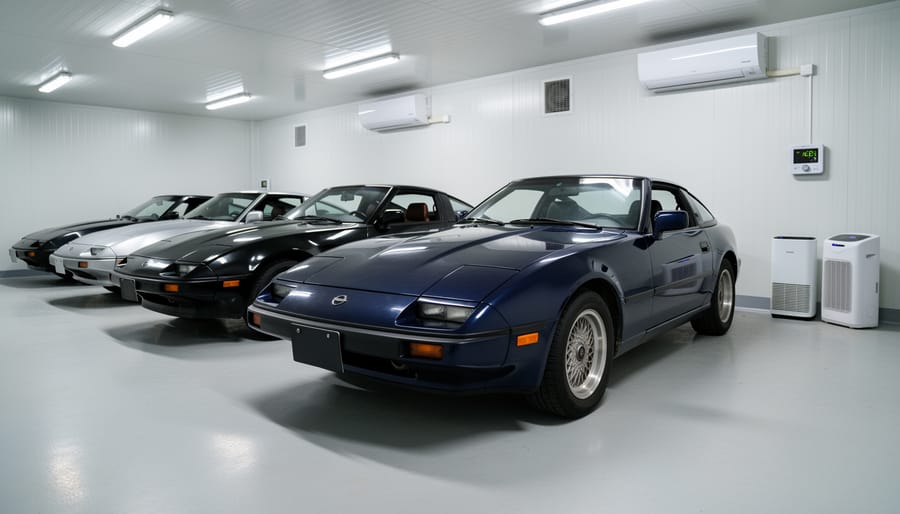
Where you store your classic car dramatically affects when you need to begin preparation work. Climate-controlled facilities let you delay winterization by two to three weeks compared to unheated garages, since consistent temperatures eliminate the urgency of beating the first freeze. In these premium environments, you can prepare your Z-car in mid-November rather than early October, and your spring awakening window extends further into May without moisture or temperature shock concerns.
Unheated garage storage requires earlier preparation, typically by late October in northern climates, because ambient temperatures mirror outdoor conditions. Your car faces the same freeze risks as outdoor storage, just with protection from precipitation and UV exposure. Outdoor storage under quality covers demands the earliest preparation of all, often by mid-October, since you’re working against both temperature and moisture intrusion.
Professional storage facilities often book months in advance, particularly in collector-dense regions. Reserve your spot by August for November storage to secure climate-controlled space. Many facilities require vehicles to arrive fully prepared, imposing hard deadlines that override weather-based timing flexibility. Factor in their intake schedules when planning your preparation calendar.
Your storage choice also influences classic car insurance requirements and rates, with some policies mandating specific facility standards for winter coverage. Confirm these details before committing to a storage approach, as switching facilities mid-season disrupts both timing and coverage continuity.
Vehicle Age, Condition, and Value Considerations
Your car’s current state fundamentally shapes how you approach seasonal transitions. A numbers-matching, concours-condition Z-car demands meticulous preparation starting weeks earlier than general guidance suggests, these vehicles can’t tolerate rushed procedures or shortcuts that might compromise originality or finish. Begin winterization by mid-October to allow unhurried fluid changes, thorough cleaning, and careful documentation.
Partially restored or driver-quality classics offer more flexibility. You can follow standard timing windows, though older seals, worn gaskets, and marginal electrical systems benefit from extra attention during preparation. Check for emerging issues now rather than discovering them mid-storage.
Higher classic car value justifies conservative timing. A $75,000 240Z warrants earlier preparation and slower spring awakening than a $15,000 project car. The financial stakes alone argue for extra days spent on proper procedures.
Mechanically fragile vehicles need graduated awakening periods. Instead of the typical three-week spring recommissioning, allocate six weeks for high-value or delicate cars. Start fluid circulation and electrical checks in early March even if driving won’t begin until May. This extended timeline catches problems while you still have margin for repair before events and driving season.
Your Personal Schedule and Preparation Time Requirements
Even with perfect timing knowledge, seasonal preparation fails when you don’t allocate realistic time blocks. Thorough winterization typically requires 4-8 hours of focused work, changing fluids, stabilizing fuel, disconnecting batteries, protecting surfaces, and addressing storage environment details. Spring awakening demands even more patience: 6-10 hours spread across multiple sessions to inspect systems, replace fluids, check for winter damage, and gradually recommission mechanical components without rushing.
Schedule preparation work during weekends or extended time off, not squeezed into weekday evenings where you’ll cut corners or leave tasks incomplete. Break the process into phases if needed, fuel system one day, chassis work another, rather than attempting everything in a single exhausting marathon. Plan around weather too; you need decent temperatures for fluid work and a dry day for undercarriage inspection. Start your preparation calendar two weeks before your target completion date to accommodate parts delays, unexpected discoveries, or simply the reality that classic car work always takes longer than anticipated.
Ongoing Seasonal Care and Mid-Storage Check-Ins
Seasonal preparation protects your classic Z-car during the transition periods, but what happens during the three to five months between putting it away and bringing it back matters just as much. Storage isn’t a static state where you walk away and return months later. Environmental conditions shift, mechanical systems drift, and small problems that could be caught early become expensive headaches when ignored. A structured check-in schedule turns storage from a risky hibernation into a managed preservation period.
Plan to visit your stored vehicle at least once per month, more frequently if conditions are marginal. Each visit should follow a consistent pattern: check tire pressures and rotate the car slightly forward or back to prevent flat-spotting, inspect for moisture accumulation or condensation (particularly inside the windshield and around weather stripping), look for rodent evidence like droppings or nesting material, verify that covers remain secure and aren’t trapping moisture, and document any changes in your storage log. These visits take 15 minutes but catch issues before they compound.
- Battery Tender vs. Trickle Charger
- A battery tender monitors charge state and pulses current only as needed, preventing overcharge damage during long storage periods. A trickle charger applies constant low-level current and can boil batteries dry if left connected for months.
- Vapor Barrier
- A plastic or foil sheet placed under the vehicle to prevent ground moisture from rising into the chassis and underbody. Particularly critical in unheated garages or spaces with concrete floors that transmit dampness.
- Desiccant Packets
- Silica gel or calcium chloride sachets placed inside the cabin and trunk to absorb ambient moisture. Replace or recharge them monthly, as saturated desiccants stop working and can even release captured moisture back into the air.
- Fuel Stabilizer Chemistry
- Additives that slow oxidation and prevent varnish formation by interrupting the chemical breakdown of gasoline compounds. Effective for six to twelve months depending on formulation, after which stored fuel should be treated as degraded regardless of stabilizer use.
Your battery maintenance schedule depends on storage conditions and equipment. Classic Z-cars with their original electrical systems benefit from a quality smart tender connected throughout storage, not just periodic charging. If you’re storing without a tender, disconnect the negative cable and charge the battery every four to six weeks, bringing it to full charge before reconnecting. Cold temperatures slow self-discharge but also reduce available capacity, so winter batteries need the same attention as summer ones.
Climate monitoring matters more than most owners realize. If your storage space lacks climate control, track temperature and humidity with a recording monitor, not just spot checks during your visits. Sustained humidity above 60 percent invites corrosion regardless of how well you prepped the car. Temperatures cycling above 80 degrees can pressure-cook interiors under covers and accelerate rubber deterioration. If conditions drift outside safe ranges for more than a week, you may need to run a dehumidifier, improve ventilation, or consider moving the vehicle.
Keep a storage log documenting each visit: date, observations, actions taken, and environmental readings. This record helps you spot patterns (humidity spiking in March, battery voltage dropping faster than expected) and provides valuable data for refining your approach next season. Photography is particularly useful for tracking gradual changes like cover fit, tire contact patches, or fluid levels. When you prepare for classic show prep in spring, this documentation tells you exactly what your car experienced while sleeping and where to focus your awakening efforts.
Frequently Asked Questions
The seasonal preparation calendar looks tidy on paper, but real life rarely cooperates perfectly. Weather surprises you, travel plans change, or you simply run out of weekends before the first freeze arrives. Here’s how to handle the most common timing complications that classic car owners face.
What if I miss my winterization window and it’s already freezing?
You can still winterize, but work quickly and cautiously. If temperatures have already dropped below freezing, skip outdoor fluid changes and focus on getting the car to shelter first. Drain the cooling system immediately if there’s any risk of freeze damage, add fuel stabilizer to prevent varnish formation, and complete the full winterization process once you have above-freezing conditions inside your storage space.
Can I prepare my car too early for winter storage?
Yes, and the main risk is battery drain and fuel degradation. Winterizing in August or early September means your fuel sits longer (even with stabilizer, degradation accelerates after 90 days), and batteries can self-discharge during extended storage. If you must prepare early due to travel or facility schedules, plan for a mid-storage battery charge and consider adding fresh fuel before your first spring drive.
How should I handle an unexpected cold snap before I’ve winterized?
Priority one is protecting the cooling system from freeze damage. If you can’t complete full winterization immediately, at minimum add antifreeze to proper concentration or drain the coolant entirely, disconnect the battery to prevent drain, and get a car cover on to protect paint and seals. Treat this as temporary crisis management, then complete proper winterization within the next week.
Is it safe to drive my classic car during those warm winter days?
Only if you de-winterized it properly first. Don’t just add fuel and turn the key after months of storage, you need to check all fluids, inspect tires for flat spots, verify brake function, and let systems warm gradually. A single 60-degree February afternoon doesn’t justify the wear and risk of an improper awakening; save driving for when you can commit to full spring preparation.
Emergency scenarios deserve honest answers. If severe weather threatens and your car isn’t stored yet, getting it under cover trumps completing every winterization task perfectly. A hastily stored car with basic protection beats a perfectly prepped car sitting in an ice storm. You can address missed steps during your first storage check-in.
Travel complications create their own timing pressures. If you’ll be away during the ideal preparation window, err on the side of early winterization rather than delegating the work or leaving the car vulnerable. The modest risks of a few extra storage weeks pale against the damage from improper or rushed preparation.
The question of shortcuts appears every season, usually when time runs short. There is no abbreviated winterization that’s truly safe for valuable classics. You might skip a thorough detailing or defer some maintenance items, but fuel stabilization, fluid protection, proper battery management, and climate control remain non-negotiable. Cutting corners on these fundamentals is how you turn a time crunch into an expensive spring disaster. If circumstances force you to choose, prioritize mechanical protection over cosmetic perfection, but understand you’re accepting increased risk either way.
Protecting your classic car through thoughtful seasonal preparation isn’t just maintenance, it’s preservation of automotive heritage. The timing windows outlined in this guide provide a framework, but your specific climate, storage conditions, and vehicle characteristics will shape your actual schedule. A 240Z in Minnesota demands different preparation timing than one in Southern California, just as a pristine show car requires more cautious handling than a driver-quality weekend cruiser.
The investment of time you make in proper seasonal transitions pays dividends that extend far beyond preventing mechanical problems. You’re safeguarding the originality of components that can’t be replaced, maintaining the systems that define these cars’ character, and preserving value that took decades to accumulate. Every spring awakening becomes smoother when you’ve winterized correctly, and every driving season more enjoyable when you’ve stored wisely.
Mark your calendar based on your local climate patterns, allow yourself adequate preparation time, and resist the temptation to rush either transition. Your classic car has already survived decades, giving it the seasonal care it deserves ensures it will continue rewarding you, and perhaps future generations, for many seasons to come.