
How Vintage Car Headlights Reveal the Story Behind Every Classic Show
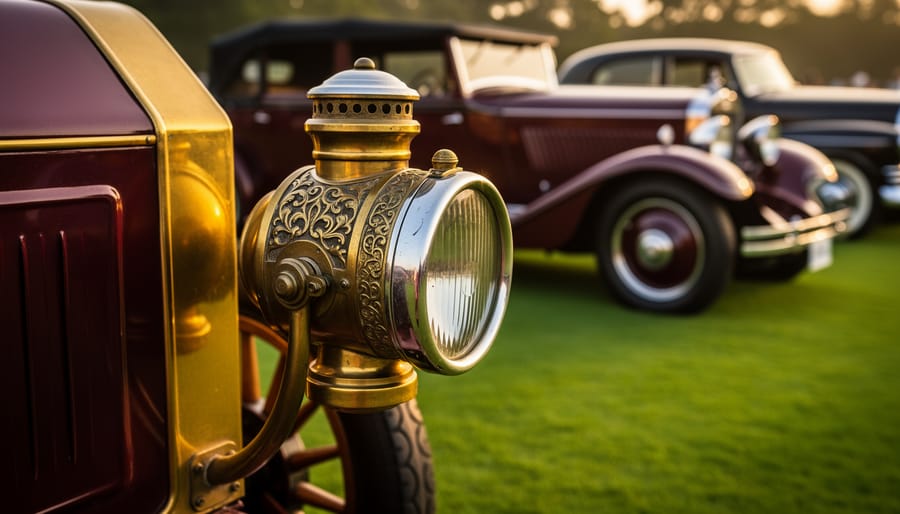
Examine the lens configuration first—sealed beam units indicate post-1940 manufacture, while separate bulb housings with ornate brass or nickel-plated reflectors signal pre-war craftsmanship. Look for manufacturer stampings on the rim or reflector housing, as companies like Guide, Dietz, and C.M. Hall produced distinctive designs that help pinpoint a vehicle’s production era within a few years.
Study the mounting style to understand engineering evolution across decades. Vintage automobiles from the brass era (1896-1915) featured acetylene or carbide lamps mounted on separate brackets, while cars from the 1920s transitioned to electric systems with drum-style housings. The 1930s introduced streamlined designs with integrated fenders, and post-war models adopted the standardized seven-inch sealed beam mandated by federal regulations in 1940.
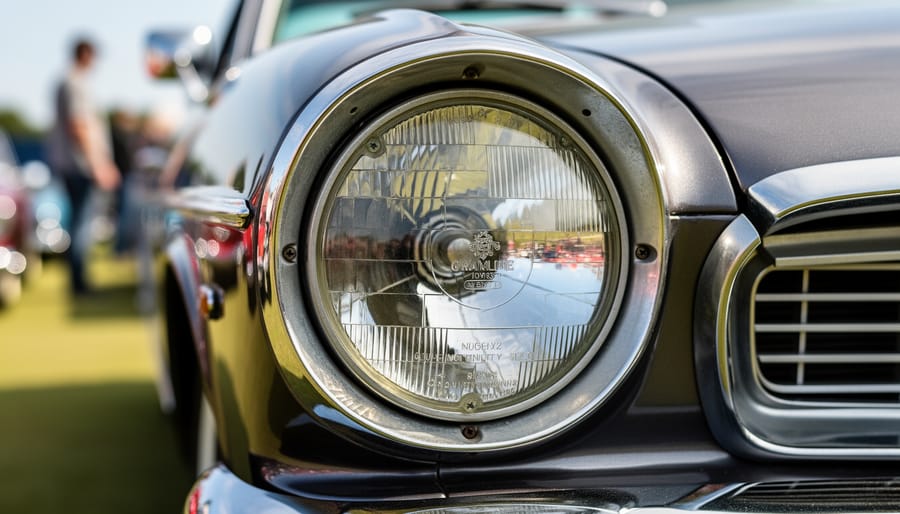
Evaluate glass quality and patina as authenticity markers when examining classics at vintage car events. Original lenses display period-correct manufacturing techniques—hand-pressed glass with slight imperfections for pre-1930 vehicles, machine-pressed clarity for later models. Fluting patterns, the Fresnel lens design, and jeweled accents serve as fingerprints of specific manufacturers and model years. Reproductions often lack the weight, optical clarity, and exact pattern replication of authentic components.
Document wiring configurations and switch mechanisms to assess restoration quality. Early electrical systems used cloth-wrapped wiring and brass terminals, while later vehicles incorporated rubber insulation and standardized connectors. Toggle switches mounted on steering columns or dashboard panels evolved from simple on-off mechanisms to dimmer controls by the mid-1930s. Understanding these technical progressions transforms casual observation into informed evaluation, allowing you to appreciate the engineering achievements that illuminate automotive history at every show and auction.
The Evolution of Automotive Lighting: A Timeline Through the Eras
Brass-Era Beginnings (1896-1915)
The Brass Era, generally considered to encompass the years 1896 through 1915, represents a golden age of automotive craftsmanship, and nowhere is this more evident than in the headlamps of the period. These early lighting systems relied primarily on acetylene gas or oil, technologies borrowed from mining and railroad industries. Acetylene lamps, which mixed calcium carbide with water to produce a bright, flickering flame, became the preferred choice for serious motorists due to their superior illumination compared to kerosene alternatives.
What makes these headlights particularly captivating for collectors is the extraordinary metalwork involved in their construction. Skilled artisans hand-formed brass and copper housings, often incorporating ornate beveled glass lenses and polished reflectors. Each manufacturer developed distinctive styling cues, from the cylindrical “artillery-style” lamps to the conical “torpedo” designs. When examining vehicles at vintage car shows, you’ll notice these headlights were mounted on elaborate brass brackets, creating an unmistakable profile that immediately identifies a Brass Era automobile. The patina and craftsmanship of original examples command premium prices today, making authentication knowledge invaluable for collectors.

The Electric Revolution (1915-1930s)
The dawn of electric headlamps marked a pivotal transformation in automotive lighting history. When Charles Kettering’s electric starter system was introduced on Cadillac vehicles in 1912, it set the stage for a complete electrical revolution that would fundamentally change headlight design by the mid-1910s. This innovation eliminated the dangerous and cumbersome task of hand-cranking engines while simultaneously providing reliable power for lighting systems.
By 1915, electric headlamps began replacing acetylene systems across most manufacturers’ lineups, offering unprecedented convenience and safety. These early electric headlights featured distinctive drum-shaped housings with prominent reflectors, typically finished in nickel or brass. The sealed beam concept hadn’t yet emerged, so bulbs remained accessible through removable back plates secured with spring clips or threaded rings.
During the 1920s, headlight styling evolved alongside automotive design trends. Streamlined shells replaced bulbous early designs, while manufacturers experimented with various lens patterns to improve beam control. When attending vintage car events, you’ll notice these transitional-era vehicles display a fascinating variety of lighting configurations, from side-mounted cowl lights to integrated fender lamps, each telling the story of rapid technological advancement during this dynamic period.
Streamline and Sealed Beam Era (1940s-1970s)
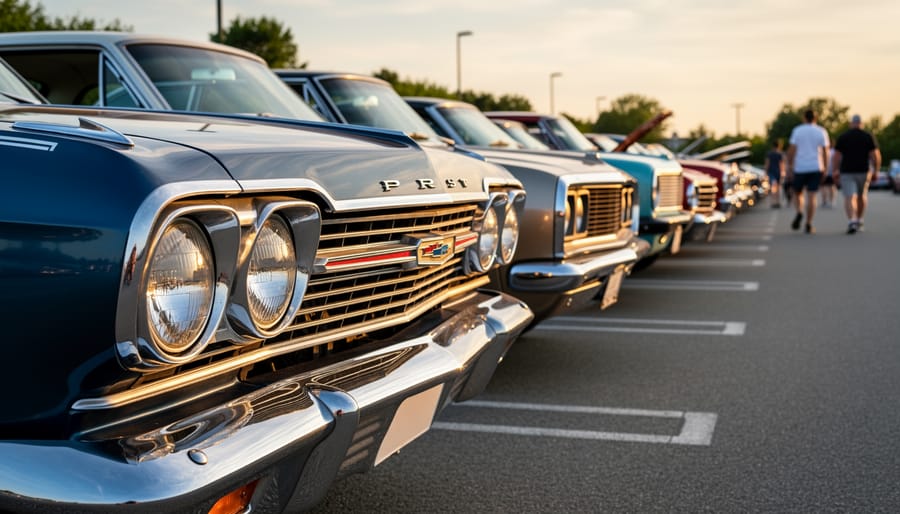
The post-war era brought revolutionary changes to automotive lighting that forever altered vehicle design. In 1940, when the sealed-beam doctrine went into effect, American manufacturers embraced a new standardized lighting system that fused the filament, reflector, and lens into a single replaceable unit. This sealed beam technology promised consistent quality and simplified replacement, though it also meant designers had to work within strict dimensional constraints.
For collectors attending vintage car shows today, these standardized round headlights serve as instant chronological markers. The transition from individual bulb replacements to complete sealed units represented more than technical progress—it reflected an industry-wide shift toward consumer convenience and manufacturing efficiency. As streamlined styling dominated the 1940s through 1960s, headlights became increasingly integrated into flowing fender lines and chrome surrounds, transforming from protruding accessories into design elements that complemented the sweeping aesthetics of mid-century automobiles.
When examining vehicles from this period at events, you’ll notice how rectangular sealed beams appeared in 1975, offering designers additional creative freedom while maintaining the standardization philosophy that defined this transformative era.

Distinctive Headlight Features That Define Vintage Car Categories
Mounting Positions and Their Significance
The positioning of headlights tells a fascinating story about automotive design evolution and manufacturing philosophy. In the earliest days of motoring, through the 1920s, fender-mounted headlights reigned supreme. These distinctive “drum” style lights sat prominently atop front fenders, connected by brass or nickel-plated brackets. Manufacturers like Packard and Pierce-Arrow favored this arrangement, which made lamp replacement straightforward and allowed mechanics easy access for the frequent maintenance these acetylene and early electric lights required.
As the 1930s progressed, cowl-mounted headlights began appearing on streamlined designs. Positioned higher on the body between the hood and fenders, this configuration improved aerodynamics while creating a more unified aesthetic. Auburn and Cord exemplified this transition, blending form with function as speeds increased and wind resistance became more critical.
The post-war era brought integrated headlights, where lamps nestled directly into fenders or grilles. This represented a major shift in automotive manufacturing, as bodies became single-unit structures rather than assembled components. By the 1950s, this integration was standard across most manufacturers, from economy brands to luxury marques.
Understanding these mounting variations helps collectors date vehicles at shows and recognize restoration authenticity. A 1925 Buick with integrated headlights, for instance, would signal non-original modifications worth investigating further during event inspections.
Lens Patterns and Glass Characteristics
The glass itself tells a remarkable story about when and where a vintage headlight was made. Fluted glass, characterized by vertical ridges running across the lens surface, was particularly popular during the 1920s and 1930s. These distinctive grooves weren’t merely decorative—they helped diffuse light more effectively across early roadways, though they also created that romantic, slightly hazy glow we associate with pre-war automobiles.
Jeweled lenses represent another hallmark of automotive craftsmanship. These features, often appearing as raised glass “gems” or textured patterns around the lens perimeter, were especially prevalent on luxury marques from the 1910s through the 1940s. Manufacturers like Packard and Pierce-Arrow frequently incorporated these elegant touches, transforming functional lighting into statement pieces.
Prism patterns became increasingly sophisticated as glass-making technology advanced. Guide Lamp, Dietz, and other major suppliers developed proprietary prismatic designs that directed light beams with greater precision. Learning to recognize these patterns—whether the distinctive star-burst effect of certain Guide models or the geometric precision of European Bosch and Hella lenses—helps collectors authenticate headlights and trace their origins.
Many manufacturers stamped or molded their names directly into the glass, along with patent numbers and production codes. These markings, often subtle and easily overlooked, provide invaluable authentication clues when examining vehicles at shows and gatherings.
Housing Materials and Finishes
The housing material of a vintage headlight serves as a fingerprint of its era, revealing much about a vehicle’s authenticity and historical context. Understanding these materials becomes essential when evaluating cars at collector events or considering restoration projects.
Brass housings dominated the earliest automotive lighting, from the 1900s through the mid-1920s. This copper alloy offered superior corrosion resistance and excellent workability for craftsmen creating intricate lamp designs. Many manufacturers left brass exposed, developing a warm patina over time that collectors now prize. However, nickel-plating became increasingly popular during this period, providing a brighter, more reflective silver finish that wouldn’t tarnish as readily.
The transition to chrome-plated housings began in the late 1920s and reached its zenith during the 1930s through 1960s. Chrome offered unprecedented brilliance and durability, perfectly matching the Art Deco and streamlined aesthetics of the era. When examining chrome headlights at events, watch for the characteristic mirror-like finish, though age-appropriate patina demonstrates originality over restoration.
Painted housings emerged as manufacturing economics shifted during the 1940s and beyond. Black painted steel became standard for many marques, particularly on utilitarian and military-influenced designs. The paint type, texture, and color can help verify whether a headlight matches factory specifications, making this knowledge invaluable when authenticating vehicles at shows and auctions.
Reading Headlights at Vintage Car Shows: A Practical Guide
Spotting Original vs. Reproduction Components
Distinguishing authentic period headlights from modern reproductions requires a trained eye and attention to detail that develops over time. For collectors attending vintage car events, this skill becomes invaluable when evaluating vehicles and making purchasing decisions.
Start by examining the patina—that aged surface quality that only genuine decades-old components possess. Original headlights typically display consistent weathering patterns, with subtle discoloration in glass lenses and natural oxidation on metal housings. Reproductions often appear too perfect or exhibit artificial aging that lacks the organic randomness of true age. Run your fingers along the chrome bezels; authentic pieces usually show wear patterns corresponding to regular handling and cleaning over many years.
Manufacturing marks tell compelling stories about authenticity. Original headlights bear maker’s stamps, patent numbers, and date codes that correspond to the vehicle’s production period. These markings, often found on lamp housings or reflector backs, should match the manufacturer’s known specifications for that era. Research factory records and period catalogs to verify these details. Reproductions may omit such markings entirely or display incorrect information that doesn’t align with historical production data.
Construction methods reveal much about authenticity. Examine how components fit together—original headlights utilized period-appropriate fasteners, welding techniques, and assembly methods that differ from modern manufacturing. Rivets, screws, and solder joints should reflect the technology available during the vehicle’s era. Glass thickness, reflector silvering techniques, and bulb socket designs all evolved through the decades, providing additional authentication clues.
When uncertain, consult marque specialists, restoration experts, or fellow collectors who’ve developed expertise in specific makes and models. Their accumulated knowledge proves invaluable in navigating the sometimes murky waters between original and reproduction components.
Manufacturer-Specific Identification
When you approach a vintage automobile at a collector car event, the headlights often serve as the vehicle’s most distinctive facial feature, revealing its manufacturer’s identity with remarkable clarity. Understanding these signature designs transforms casual observation into informed appreciation, connecting you with the engineering philosophies and aesthetic visions that defined each marque.
Packard headlights exemplify the brand’s commitment to luxury and innovation. Their oval-shaped headlamp housings, particularly on models from the 1930s, feature distinctive chrome bezels that integrate seamlessly with the radiator shell. The company pioneered the use of sealed-beam technology in the late 1930s, and their housings often display superior craftsmanship with intricate ribbing patterns on the reflectors.
Cadillac distinguished itself through bold, progressively styled lighting. The 1941-1948 models showcase the famous “torpedo” headlights integrated into the fenders, creating a streamlined appearance that influenced American automotive design for decades. Earlier Cadillacs from the 1920s featured imposing drum-style headlights mounted on sleek tie bars, announcing the vehicle’s presence with undeniable authority.
Ford’s Model T and Model A present fascinating contrasts. The Model T utilized simple brass or nickel-plated acetylene headlamps initially, transitioning to electric lights in later years. The Model A advanced this concept with distinctive stainless steel buckets and clear glass lenses that remain instantly recognizable today.
Pierce-Arrow created perhaps the most revolutionary headlight design in automotive history with their integrated fender headlights introduced in 1913. These groundbreaking lights were built directly into the front fenders rather than mounted separately, creating a sleek profile that became the marque’s calling card.
European manufacturers like Rolls-Royce and Bugatti favored more restrained, elegant designs. British marques often employed Lucas “King of the Road” units with characteristic P-100 markings, while French manufacturers like Bugatti specified Marchal lights, distinguished by their teardrop shapes and sophisticated lens patterns that diffused light with characteristic European refinement.
The Role of Headlights in Concours Judging and Authenticity
Common Restoration Pitfalls to Recognize
Even passionate restorers sometimes stumble when bringing vintage headlights back to their former glory. Understanding these common missteps helps preserve the authentic character of your classic automobile and maintains its historical integrity.
One frequent error involves chrome plating processes. Modern triple-chrome plating, while durable and brilliant, often appears too bright and reflective compared to the original nickel or single-chrome finishes used in pre-war and early post-war vehicles. This overly polished appearance can instantly signal a restoration to experienced judges at car shows. Period-correct plating techniques, though more expensive and harder to source, make all the difference in maintaining restoration authenticity.
Bulb selection presents another challenge. Installing modern halogen or LED replacements in vintage housings might improve visibility, but they’re anachronistic and can actually damage original reflectors designed for lower-wattage incandescent bulbs. These modifications also disqualify vehicles from certain judged events where originality matters.
Lens replacement mistakes frequently occur when restorers substitute incorrect reproductions or mix components from different model years. The fluting patterns, glass thickness, and even the slight amber tint of lenses varied significantly across manufacturers and eras. Small details like patent numbers stamped into the glass or specific mounting hardware configurations matter tremendously.
Overzealous polishing can remove manufacturer stampings and date codes, erasing valuable historical documentation that proves originality and enhances a vehicle’s provenance at prestigious concours events.
Documentation and Provenance
For serious collectors and restorers, the story behind vintage headlights often matters as much as their appearance. Every component tells a tale, and knowing how to read these mechanical narratives can significantly impact a vehicle’s authenticity and market value.
Original headlights typically bear manufacturer markings stamped or cast directly into the housing. Companies like Guide Lamp Division, Dietz, and C.M. Hall left their signatures in various forms—raised lettering on bezels, date codes on reflectors, or patent numbers embossed on lens rims. These identifiers serve as fingerprints, confirming whether components match the car’s production year and original specifications. A 1937 Packard with correct Guide lenses commands considerably more respect at concours events than one fitted with reproduction parts, regardless of condition.
Beyond manufacturer marks, serial numbers on adjustable brackets and mounting hardware provide additional verification. Period accessories like fog lamps or driving lights should similarly display proper provenance through maker’s marks and appropriate mounting methods. Stone guards, visors, and supplementary lighting from companies like Trippe or Marchal add documented value when they’re era-appropriate and retain original finishes.
Savvy collectors photograph these details and maintain records linking components to factory build sheets or period literature. This documentation becomes invaluable during judging at prestigious shows, where originality often separates regional winners from best-in-class champions. Understanding these subtle authenticity markers transforms casual observation into informed appreciation of automotive heritage.
Connecting With Fellow Enthusiasts Through Headlight Knowledge
The glow of restored headlights at a vintage car show offers more than just illumination—it provides a gateway to meaningful conversations and lasting friendships within the collector community. When you approach a beautifully maintained vehicle, commenting knowledgeably on its Woodlite or Guide lamps immediately signals your genuine appreciation for automotive craftsmanship. These observations often delight owners who’ve spent countless hours researching and sourcing authentic components, and they’re typically eager to share their restoration journey with someone who understands the significance of period-correct lighting.
Connecting with collectors through headlight discussions creates natural opportunities to exchange expertise, whether you’re admiring the sealed-beam conversion on a 1940s sedan or the hand-crafted brass fixtures on a pre-war classic. Many seasoned enthusiasts recall their own early days of learning, making them particularly welcoming to newcomers who demonstrate curiosity about these distinctive details.
These conversations often extend beyond the technical aspects into rich stories about barn finds, auction discoveries, and the detective work required to identify correct specifications for obscure models. By documenting what you learn and sharing your own findings, you contribute to the collective knowledge that preserves automotive heritage for future generations.
Regional car clubs and specialty forums frequently organize technical sessions where members demonstrate headlight restoration techniques, from rewiring harnesses to polishing reflectors. Attending these gatherings with informed questions and observations establishes your credibility while deepening your understanding of the craftsmanship that defined different eras of automotive design. The friendships formed through these shared interests often prove as enduring as the classic vehicles themselves.
Understanding vintage car headlights transforms how you experience every classic car event you attend. Armed with knowledge about sealed beam units, pre-war gravity-feed systems, and the evolution from acetylene to electric lighting, you’ll find yourself naturally drawn to examine the authentic details that separate meticulously restored vehicles from modified examples. Each car show becomes an opportunity to apply your observational skills, whether you’re admiring the elegant brass bezels on a 1920s touring car or noting the distinctive guide lamps on a postwar classic.
The craftsmanship that illuminated yesterday’s roads deserves our recognition and celebration. Those engineers who designed reliable lighting systems without modern technology, and the artisans who hand-formed lamp housings and cut glass lenses, left us with functional works of art. By studying these details, we honor their ingenuity while deepening our connection to automotive heritage.
Let your next visit to a vintage car gathering be enriched by this newfound perspective. Strike up conversations with fellow enthusiasts about headlight configurations, share observations with newcomers, and continue exploring the fascinating stories behind every component. The collector car community thrives on this shared passion for preserving history, one carefully restored detail at a time.