
What Is an Antique Car (and Why Does Its History Matter)?
An antique car is, in plain terms, an automobile old enough and historically significant enough to be treated as a artifact rather than simply an old vehicle. The most common benchmark is age: many clubs and registries use 45 years or older, while the Antique Automobile Club of America generally looks to cars at least 25 years old, and some collectors reserve the word for pre-war machines, the brass-lamped, crank-started cars of the early 1900s. Because the definition shifts depending on who you ask, understanding it matters before you buy, join a club, or register a car for show.
Age alone doesn’t earn the title, though. What lifts a car from “old” to “antique” is what it represents: a leap in engineering, a regional manufacturer that no longer exists, a design that shaped how we think about the automobile itself. A Model T tells the story of an assembly line and a nation getting mobile. A hand-built coachwork tourer from the 1920s tells a very different story about craftsmanship and wealth.
This guide walks through that history in a clear, practical way. We’ll define the terms you’ll hear at every swap meet, explain how historical significance is established, survey the major eras and landmark types, and look at how antiques are driven, shared, and preserved today. If you’ve ever stood beside a gleaming 1912 touring car and wondered what you were really looking at, you’re in the right place.
What ‘Antique’ Means for an Automobile
From Furniture to Fenders: How the Word Crossed Over
Long before anyone pictured a fender, “antique” belonged to the world of furniture, silver, and decorative arts. It came from the Latin antiquus, meaning old, and by the nineteenth century dealers used it for objects prized for their age and craftsmanship.
Then the motorcar aged faster than anyone expected. Within a generation, the first automobiles felt like relics of a vanished age. Their hand cranks, gas lamps, and tiller steering already seemed quaint beside the sleek, enclosed cars on the road.
Early enthusiasts noticed. In the 1930s and after, small groups began rescuing the oldest machines from barns and scrapyards, and the vocabulary of the antique shop followed them. Owners spoke of age, originality, and provenance just as a furniture collector would.
Clubs and registries soon needed a firm line, and “antique” became their label for cars old enough to count as history. That is how a word for grandmother’s sideboard ended up describing a brass-era tourer.
How a Car Earns Its Place in History
Provenance, Patina, and Preservation
A gleaming paint job photographs well, but it can’t tell you where a car has been. Provenance can. It’s the documented life story of a car: original build sheets, bills of sale, old registrations, service receipts, even faded photographs of earlier owners. A car with a clear paper trail is simply easier to trust, and in the collector world, trust translates directly into historical value.
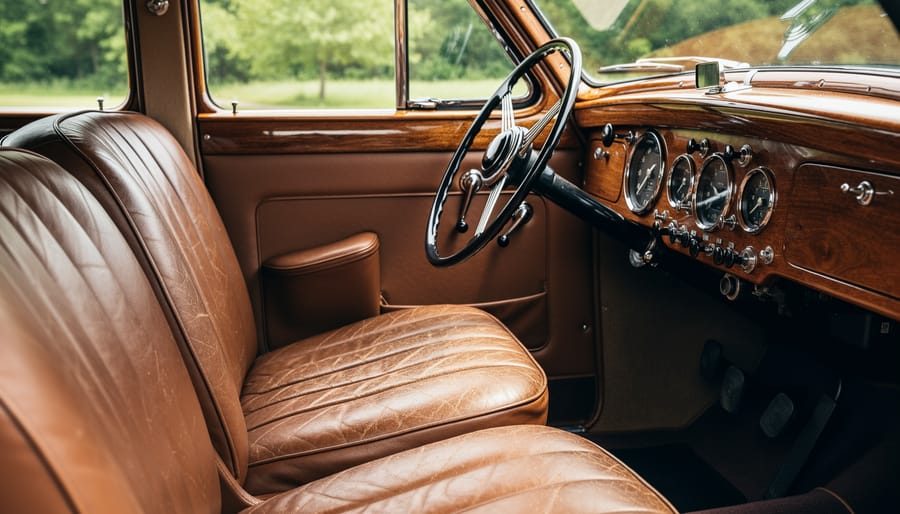
Then there’s patina, the softly worn surface that builds up honestly over decades. Think of a leather seat polished by countless drivers, or brass that has mellowed to a warm glow. Many collectors treasure patina because it can’t be faked or rushed.
Another term you’ll hear is “matching numbers,” meaning the engine, transmission, and other key parts still carry the serial numbers the factory stamped on that very car. It’s proof the machine remains what it was born to be.
Thoughtful restoration respects all of this. A good restorer asks what should be saved, not just what can be replaced, and keeps records of every step. Done well, the work protects the story rather than painting over it.
Eras and Landmarks: The Many Faces of Antique Cars
The Brass Era and the Dawn of Motoring
Picture a dawn start in 1905. The driver retards the spark, sets the choke, and swings the hand crank with a firm, careful pull, keeping his thumb tucked alongside his fingers so a kickback won’t break it. When the engine finally catches, the whole machine shudders to life, and the brass radiator shell begins to hum with heat.
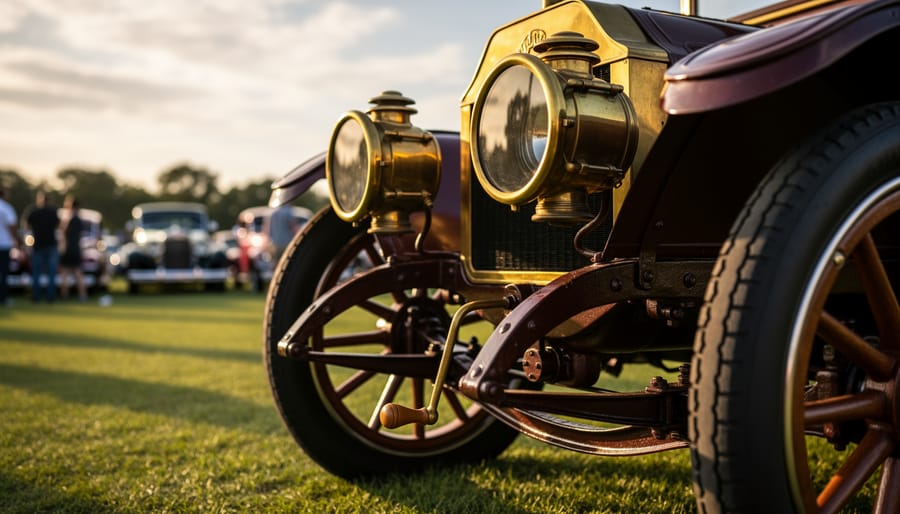
That sensory theater is what defines the brass era, roughly the first years of the twentieth century up to the early 1910s. Builders trimmed their cars in polished brass because it resisted corrosion and could be shaped into handsome radiators, lamps, and horns. Acetylene gas lamps, lit by hand with a match, lit the road ahead, and oil sidelights marked the car’s edges.
Collectors prize these cars for good reasons. They show motoring when it was still being invented, with exposed chains, wooden-spoked wheels, and bodies that carried the look of the carriage. Every one asks something of its driver, and that is part of the charm. Many owners find that mastering a brass-era tourer teaches more about early engineering than any book could.
Mass Production and the Road to the Classic Era
Before the assembly line, a car was largely a craftsman’s project. Skilled workers built each body and fitted each part by hand, which kept prices high and production low. Then Henry Ford’s moving assembly line, introduced at Highland Park in 1913, changed the pace of everything. The Model T, which Ford’s own records say was built by the millions, put ordinary families behind the wheel, and a car that was once a rich man’s toy became a daily tool.
Yet mass production did not end handcraft. At the top of the market, luxury makers sold bare chassis to coachbuilders, who fitted custom bodies in aluminum and wood to a buyer’s taste. That coachbuilt tradition produced the sweeping, elegant machines of the late 1920s and 1930s that we now call the Classic Era.
For collectors, both worlds matter. A factory-built tourer shows how industry reshaped daily life, while a coachbuilt body is rolling art. Understanding how each was made also helps when you plan a rebuild, and a guide to step-by-step restoration can show how those original methods shape today’s choices.
How Antique Cars Are Valued, Preserved, and Shared Today
Restoration as a Form of Storytelling
Restoration is less about making an old car shiny and more about deciding which parts of its story to keep. A careful restorer reads a car like a document: the worn pedal rubber, the original upholstery tacks, the factory brush marks inside a fender all say something about how it was built and used. Erase them carelessly and that record is gone.
That’s why you’ll hear two terms often. A “concours-correct” car is restored to match exactly how it left the factory, down to hose clamps and paint finish, so judges can compare it against period documentation. A “driver-quality” car is mechanically sound and tidy but not fussed over for show-field perfection, so it’s meant to be enjoyed on the road.
Neither approach is wrong, and the choice shapes a car’s standing among collectors. If you’re curious about how classic cars worth is influenced by originality and restoration quality, that guide is a good place to start. Once the work is done, classic car insurance can help protect the investment you’ve made in preserving history.
Common Questions About Antique Cars and Their History
Starting out can feel like learning a new language, so here are the questions newcomers ask most. Take your time with them.
How old must a car be to be an antique?
Many clubs and registries use a rough rule of thumb of about 45 years, but insurers, states, and countries each set their own definitions. Check the rules that apply to you before you register or insure a car.
What is the difference between antique and classic?
Antique usually points to age and historical standing, while classic tends to describe a notable, well-regarded car from a particular period. Clubs draw these lines differently, so the labels overlap more than you might expect.
Do antique cars need to be original?
Not always. Originality adds historical value, but a carefully restored car still tells its story, and many owners prefer a sound, honest driver over a showpiece.
Can antique cars be driven regularly?
Yes, and many owners say they should be, since regular use keeps seals, fluids, and moving parts healthy. Plan for gentler roads, longer stopping distances, and proper care between outings, and our seasonal storage guide covers keeping a car fit through the off-season.
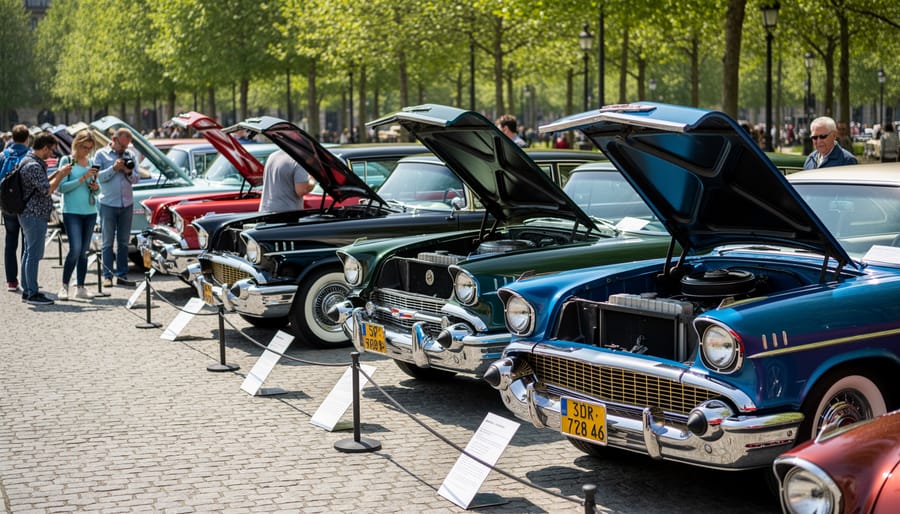
As for where to see these machines, start with local museums, regional club meets, and community car shows, where owners are usually delighted to share a car’s story. If you’re curious about how these cars were built, you can also read about the Ford Model T and its restoration. Don’t hesitate to ask questions at any event. Every seasoned collector was once a beginner too.
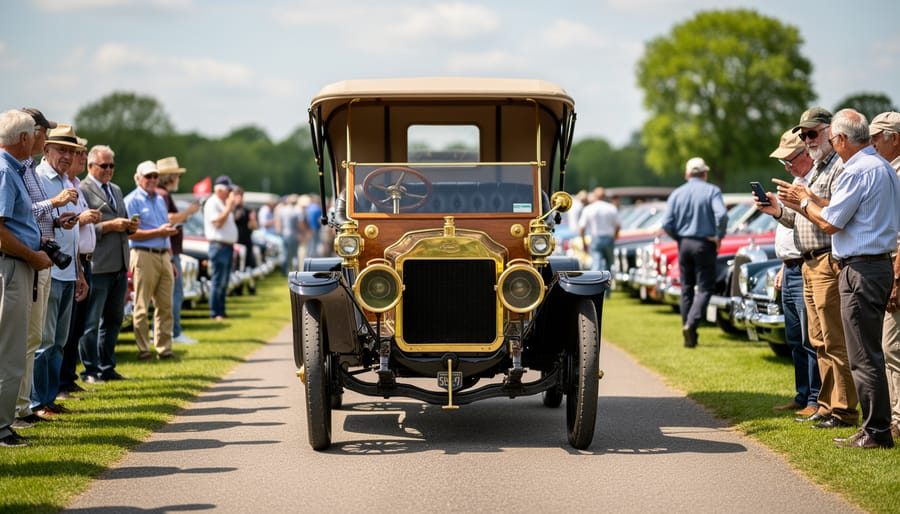
Every antique car on a show field is a piece of history you can walk around, sit beside, and sometimes hear run. Each one keeps the ingenuity, craftsmanship, and daily rhythms of its time: the brass lamps that lit rutted roads, the hand-built bodies shaped by skilled coachbuilders, the first assembly lines that put motoring within reach of ordinary families. That is the true historical significance of antique cars. They show us how people worked, traveled, and dreamed long before any of us arrived.
None of it survives by accident. It lasts because collectors, restorers, and club members care enough to keep these machines alive, preserve their stories, and share them with the next generation. You don’t need a garage full of rarities to join in. Curiosity and a willingness to learn are enough, whether you’re brand new or decades into the hobby. So keep exploring, visit a show, ask an owner about their car, and keep reading Brass-era Models for more stories from the golden age of motoring.